cranos takes the drive unit we built for rehabilitation in water into microgravity – to keep astronauts strong, moving, and close to the people they left behind.
Muscles lose strength, bones lose density, and the spine loses the load it was built to carry. Far from home, isolation and confinement weigh on the mind as well. The longer the mission, the more it matters.
Since 2009 we have built devices that move people in water – where the body is carried, resists gently and coordinates arms and legs anew. That is where cranos comes from: the sports device craPos and the medical device ascros share the same core.
The name joins two figures of Greek myth: Uranos, the sky, and Kratos, strength. The K became a C – for coordination.
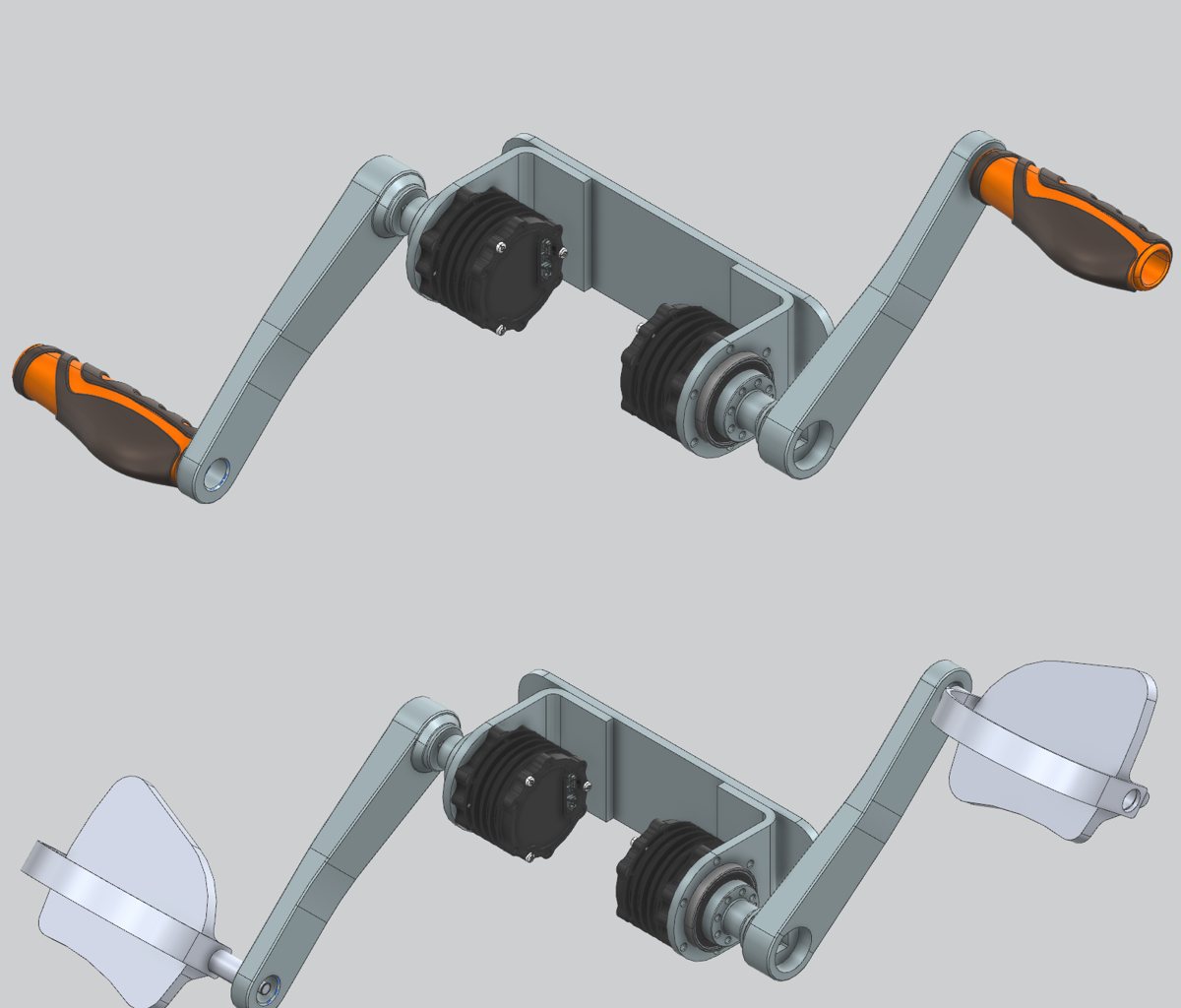
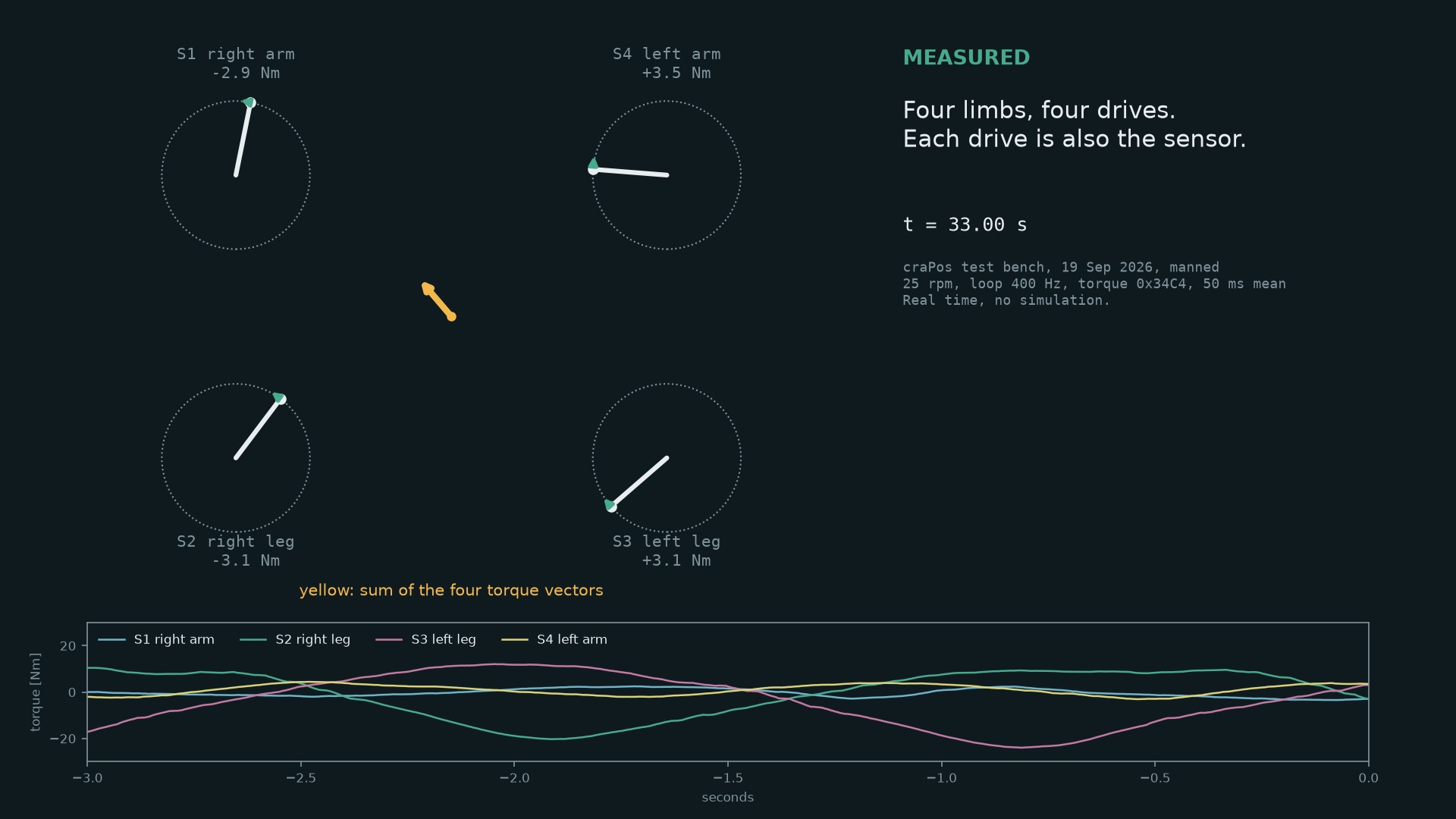
Every drive feels position, speed and force, and the controller adjusts four hundred times a second. It does not impose a rhythm – it follows the person. For cranos, the same principle is to be made compact enough for the tight mass budget of an experiment in orbit.
An astronaut trains with handles instead of pedals, inside a game. At home, a daughter or a grandson sends a photo, a voice, a message – and it appears along the way.
The game platform ECP-UGC already connects devices, games and families on Earth. Developed with Innosuisse, OST, SUPSI and FHGR.
A cranos test bench on the ground. Then a parabolic flight, to see how movement changes between zero and almost double gravity. Then an experiment on the space station. And one day, a crew that arrives on Mars able to walk.
This is where we are going. Below is where we are today.
Stage. cranos is a concept. It has not flown, and no flight opportunity is confirmed yet. The next step is a ground test bench, followed by a parabolic flight.
Model. One core for water, sport, medicine and space. Every step the drive unit takes on Earth makes cranos more real – and what microgravity teaches us flows back into rehabilitation.
Chur, Switzerland. Intellectual property, research and development of the drive unit and its three lines.
The space line as its own company, once a first flight experiment is within reach.
The test benches stand in the Srm-Lab in Chur, Switzerland. We are glad to show them to space agencies, researchers, partners and investors.
Swissrehamed GmbH
Roterturmstrasse 19, CH-7000 Chur
Joeri Gredig, CEE
joeri.gredig(at)swissrehamed.ch
+41 79 340 44 85
More: swissrehamed.ch · ascros.health · ecp-ugc.swissrehamed.ch · boutique.swissrehamed.ch
 cranos